This is the first video of The Witness, a puzzle game played by drawing lines on panels. The commentary has "never seen anything about this before," so the rules come from the panels themselves. Basket gets out of a walled courtyard, works through the blue panels that give the episode its name, and solves a shed full of mirrored glass panels. The video ends with a cable newly lit and not yet followed.
Out of the courtyard
The game opens in a dark tunnel. The first panels are one straight line, then a line with a corner. Stairs lead up into a walled courtyard with purple trees and yellow maze panels on posts, with cables running out of them.
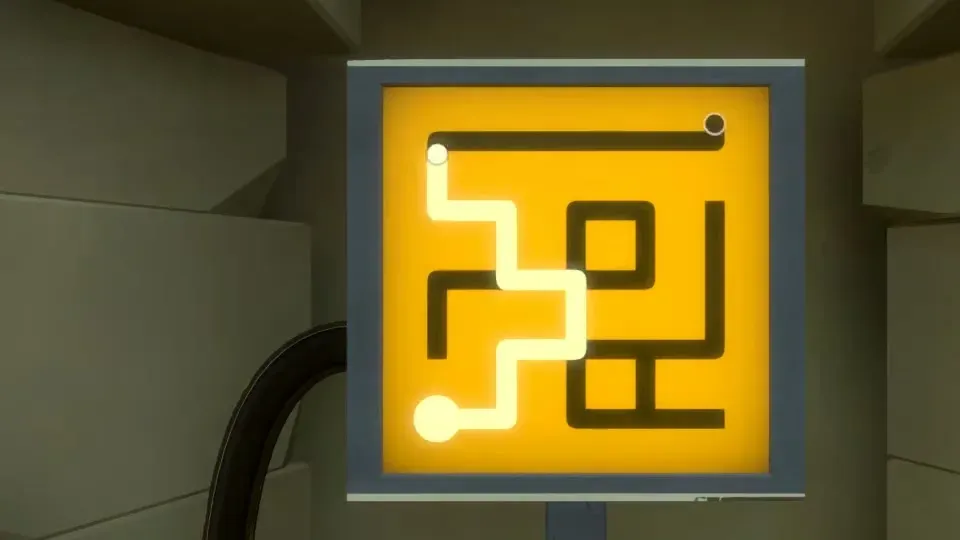
The commentary works out the cables: "I think if I want to open up that door, I might have to turn off this." Each solved panel lights a cable, and another solve sends the power elsewhere. The last panel at the gate has "two different starting options," and once it's solved the gate is "unlocked."
A door with a code
Outside the walls the path runs down to a lake. On a gray door is a panel covered in black and white squares. The commentary calls it "a door with some sort of code" and moves on, hoping something "might give us an idea later on."
Keep them separated
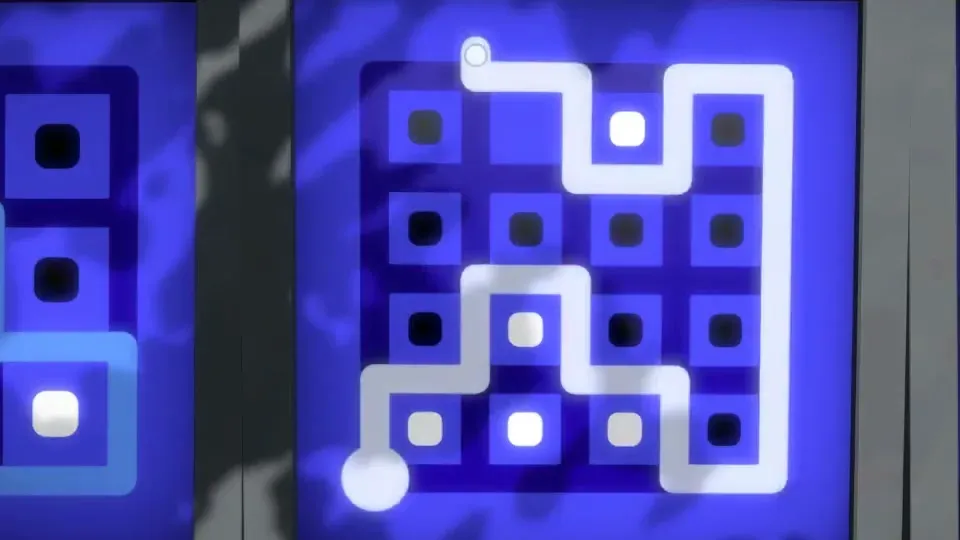
A row of blue panels uses the same black and white squares. The early ones reject a line that leaves the colors mixed, and after a few tries it clicks: "I need to solve the thing but then also keep the colors separate." The panels get bigger along the row, with more squares to split, and each falls to the same idea.
Green screens
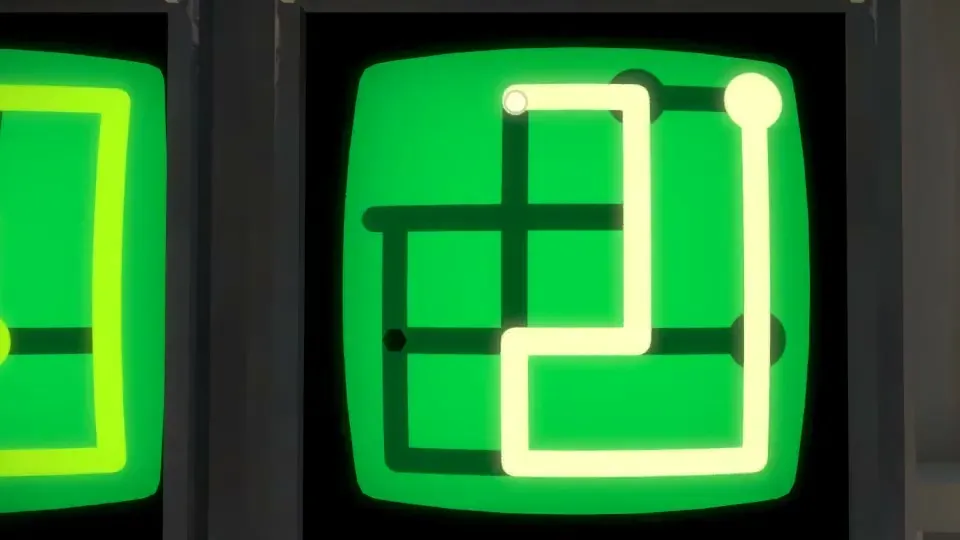
In a wooden shelter sits a row of green screen panels with dots on the lines. The first guess is "you have to go over all the holes." Panels with two starting points follow, and a test shows "you only draw with one." When the last screen lights up: "I've solved whatever these weird things are."
Mirrored lines
Back at the gray door, the code still doesn't work, and the panel gives no hint about what is wrong. "I might come back to this one again, when I have more data."
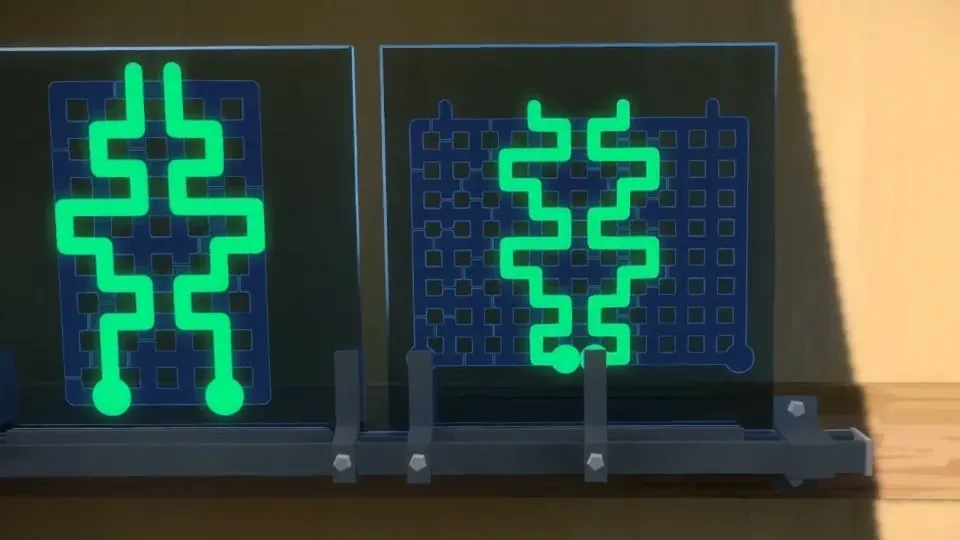
Past sandy rocks, an orange wall has a door panel where two lines are drawn at once, mirroring each other. Inside is a shed with hoses, sandbags and a row of glass panels that work the same way: "The actions I take is happening on both things." The later ones block the middle, and the lines have to go around.
Where it ends
When the last glass panel lights up, "not only does this thing open but now this cord is lit up," a green cable running out of the shed. The view turns toward the water, then up at a dark panel on a post against the sky, and the video cuts to the end card. The gray door is still locked, and the cable hasn't been followed.